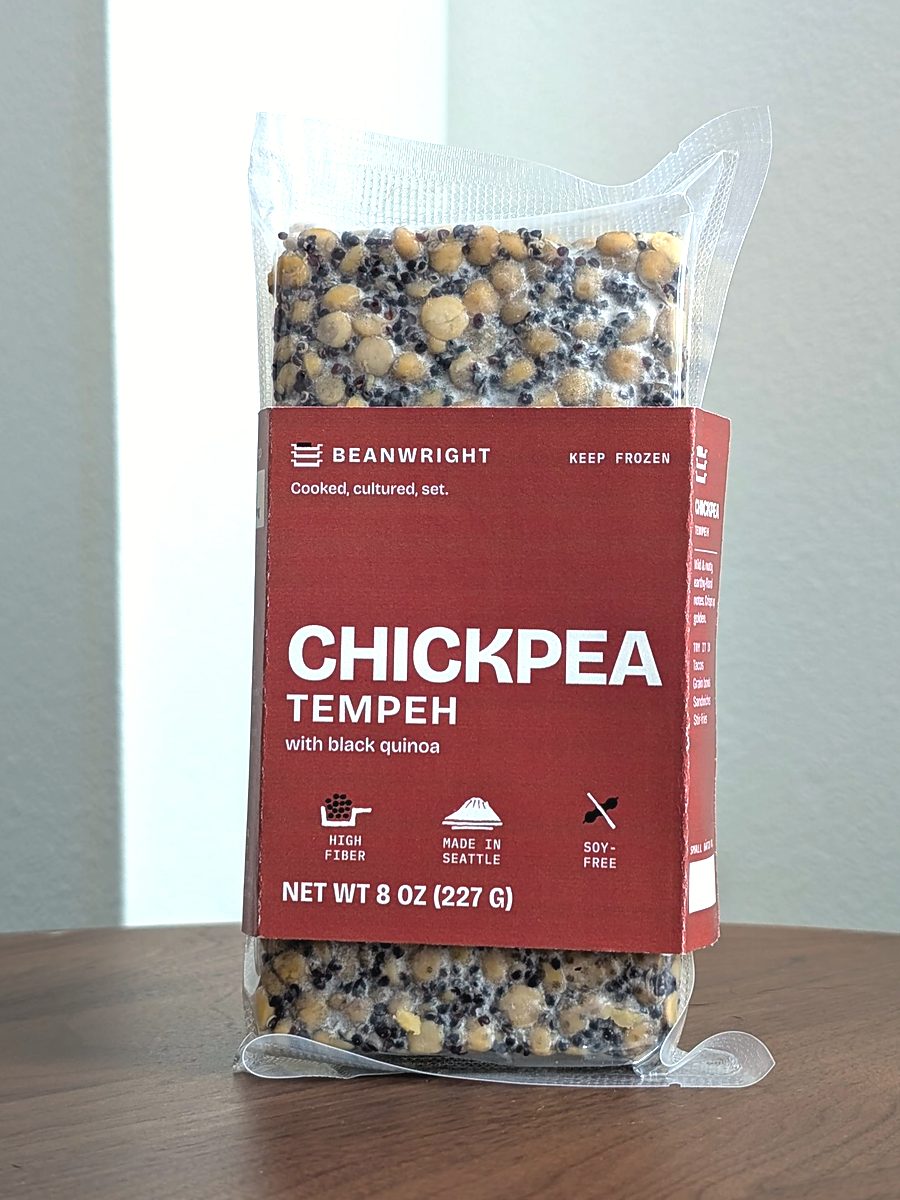
ChickpeaTempeh
with black quinoa
Mild, nutty chickpea flavor. Pan-fries golden, tender inside.
- High
fiber - Made in
Seattle - Soy-
free
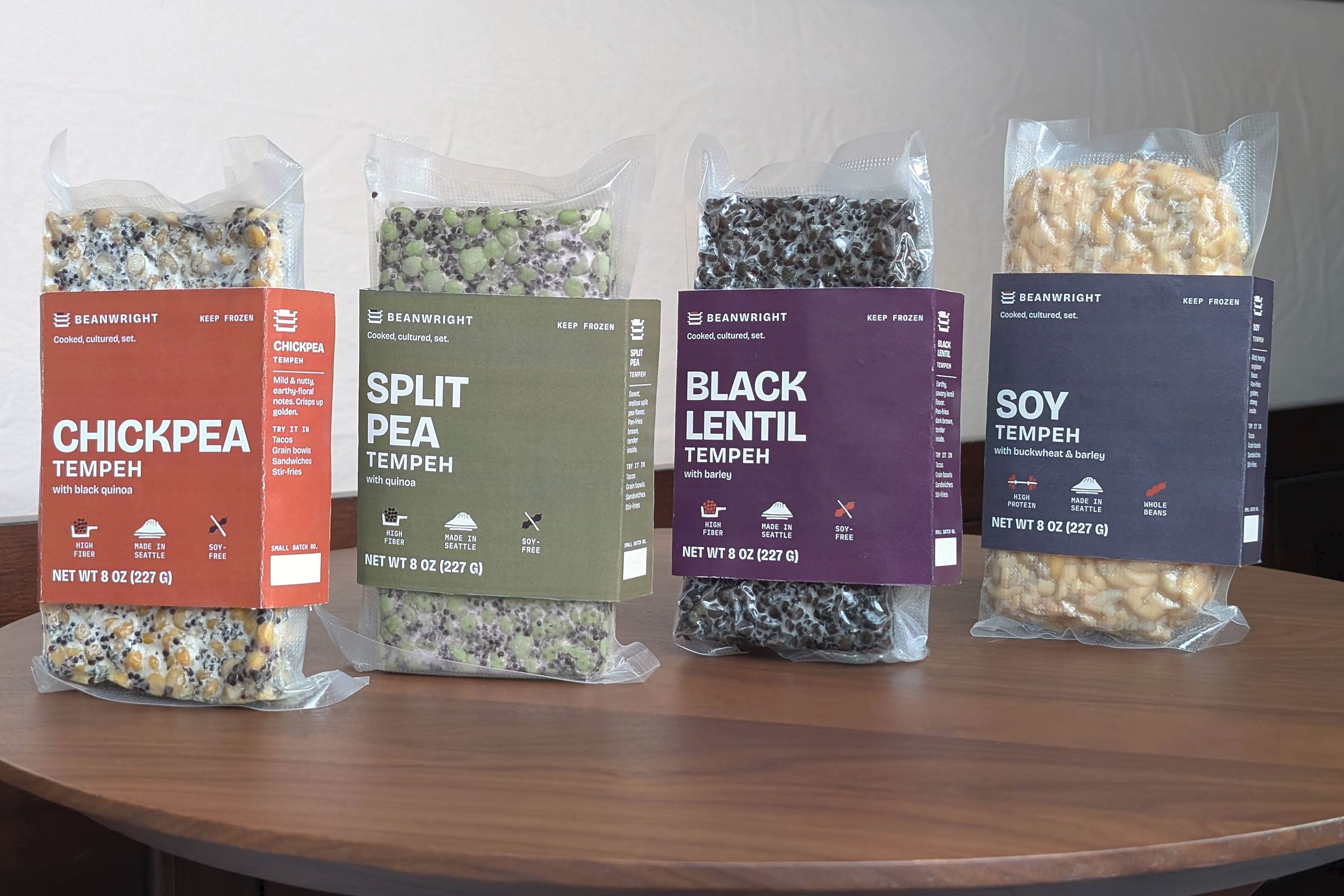
Legumes, slowly cultured into blocks of tempeh. Bring more variety to your meals with choices ranging from chickpea to split pea, black lentil to soy. Reach for our fries, burgers, and crumbles for even quicker meals.
01 — What it is
Tempeh comes from Java, in Indonesia, where it’s an everyday food. It’s made by growing an edible culture, Rhizopus oligosporus, through cooked legumes. Over the course of two days, the culture spreads between them and binds them into one firm block, the same way a mushroom’s roots spread through the forest floor.
Tempeh-style culturing does three things for the legumes: Foremost, it unifies them into a block, opening up new ways to cook them, including slicing, cubing and crumbling. It introduces subtle depth to their flavor. At the molecular level, it makes proteins more accessible and breaks down phytate, the compound that locks nutrients in the bean.
Nothing is ground down, extracted, or built back up. You can see the legumes in the block because they are still legumes, fiber and all.
Tempeh is defined by its culturing process, not a specific legume, making it an effective source of variety for options that exist somewhere between canned beans and processed meat substitutes.
02 — The lineup
with black quinoa
Mild, nutty chickpea flavor. Pan-fries golden, tender inside.
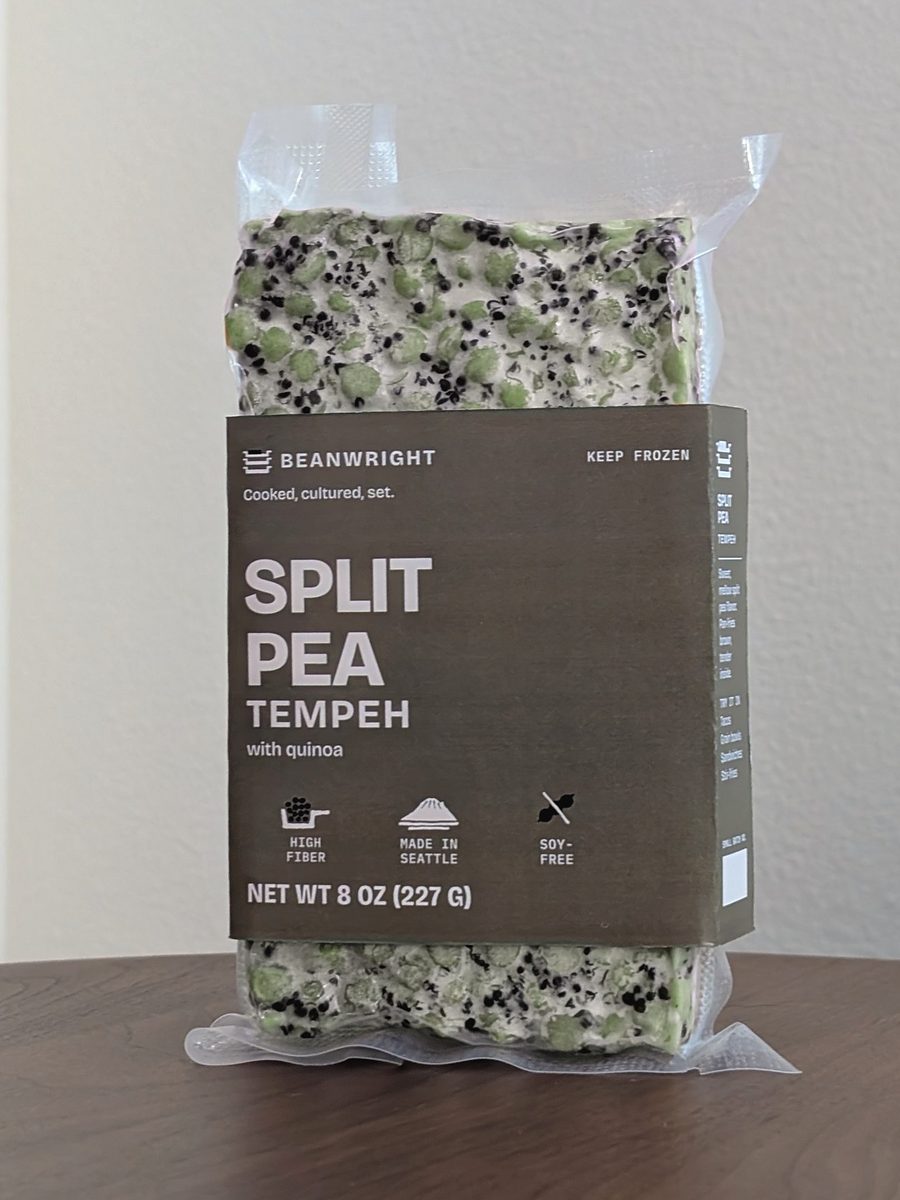
with quinoa
Sweet, mellow split pea flavor. Pan-fries brown, tender inside.
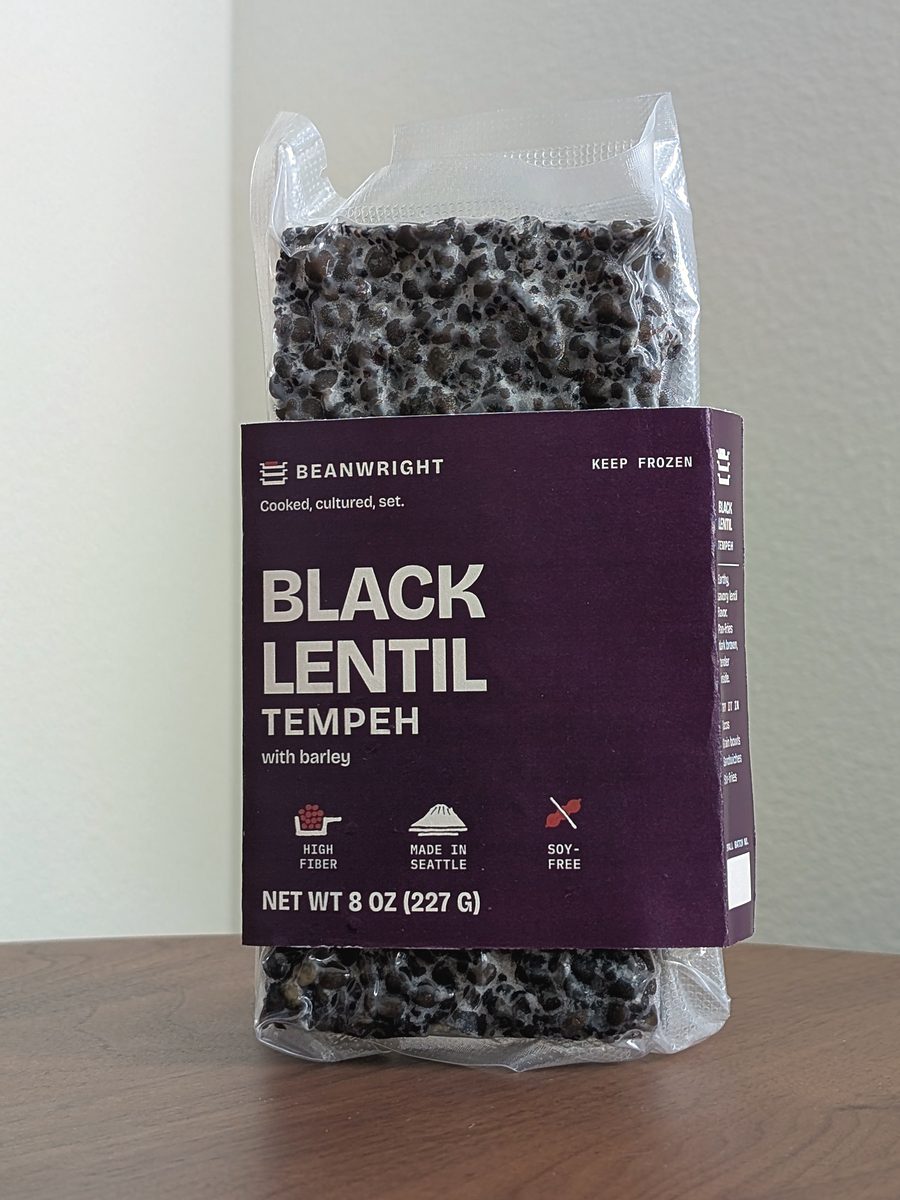
with barley
Earthy, savory lentil flavor. Pan-fries dark brown, tender inside.
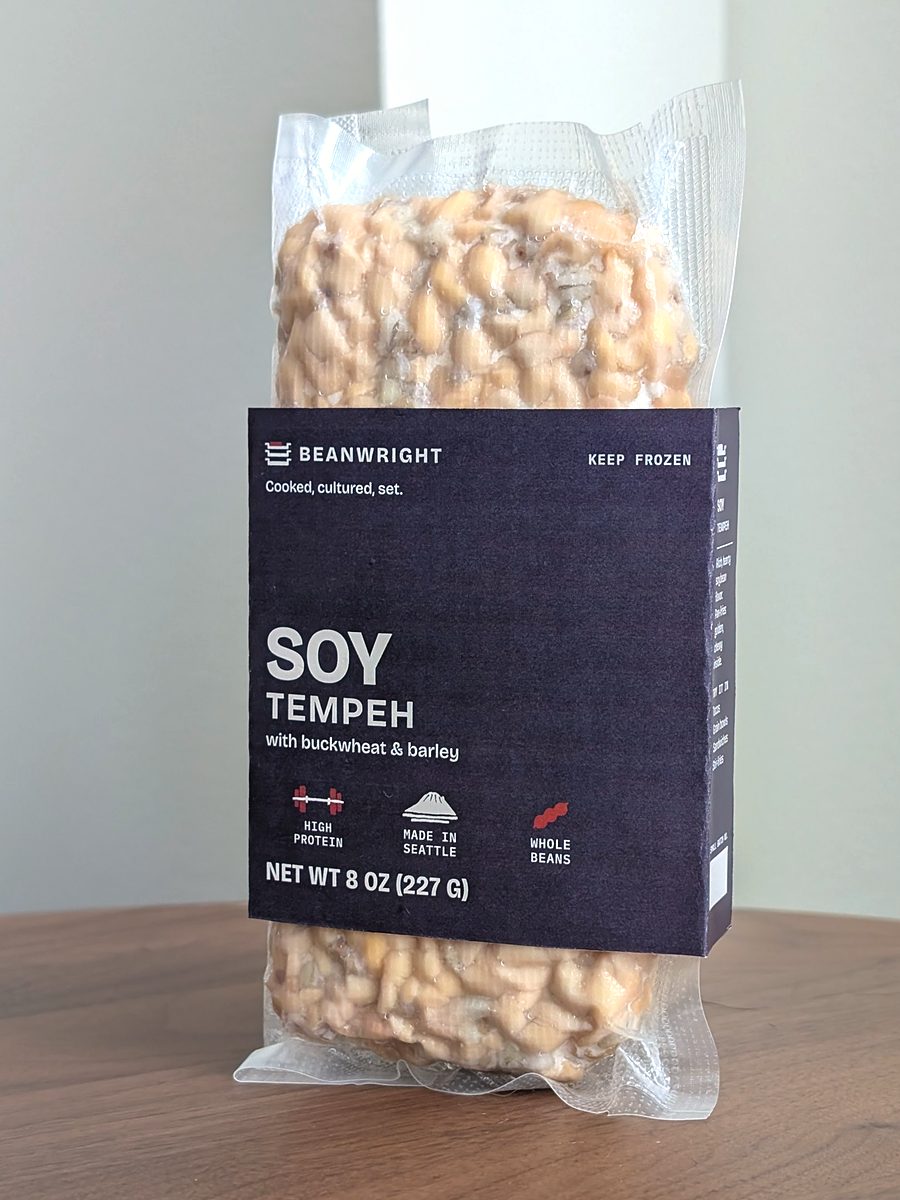
with buckwheat & barley
Rich, hearty soybean flavor. Pan-fries golden, chewy inside.

Cut from our chickpea blocks and seasoned with onion, garlic, avocado oil and apple cider vinegar. Crisp outside, soft in the middle.
Oven 400 °F, 20 min from frozen · Air fryer 400 °F, 15 min

A tempeh patty cut from our soy blocks, seasoned and ready for a pan or a grill. Serve on a bun with your favorite burger veggies and condiments.
Pan or grill from frozen · 6–8 min a side

Broken down into a loose, browning crumb. Goes into chili, pasta sauce, tacos and anything else that wants filling texture.
Straight into a hot pan · 8–10 min
03 — How to cook it
The simplest method, but far from the only one. Works for all block varieties.
Thaw
Overnight in the fridge, or fully unwrap and microwave on defrost.
Shape
Slice into thin strips, cut into cubes, or halve into thinner slabs.
Fry
Pan-fry in oil over medium heat, 2–4 minutes a side, until browned and crisp.
Season
With salt, or a sauce like sweet chili or Thai peanut.
Cook thoroughly before eating.
Once you’ve had it pan-fried, try it these ways. Any of the four blocks works.
Break the block up with your fingers into a hot pan with a little oil. Stir now and then for 8–10 minutes, until browned in spots, then season.
Tacos, pasta sauce, chili, lettuce cups
Cut into bite-size cubes and toss with a spoonful of oil and a pinch of salt. Roast at 400 °F for 20–25 minutes, turning once, or air-fry at 400 °F for 10–12 minutes.
Grain bowls, salads, snacking with a dip
Tempeh takes on a marinade well. Slice it and soak it for 30 minutes or overnight in something salty, sour and a little sweet, with a little oil in it. Then pan-fry or bake until the edges caramelize. Steaming the slices for 10 minutes first helps the marinade soak in.
Sandwiches, wraps, rice plates
Cubes or crumbles can cook right in a curry, stew or tomato sauce. Simmer for at least 15 minutes so it heats through and takes on the sauce. No frying, and no extra oil.
Curries, stews, braises
Cut the block into two thinner slabs, brush with oil and grill over medium heat for 4–5 minutes a side. Brush on a sauce in the last minute.
Burgers, sandwiches, cookouts
In Indonesia, tempeh is often sliced thin, soaked in salted water with garlic and coriander, and fried until crisp (tempe goreng). For tempe bacem, it simmers in palm sugar, galangal and spices until the liquid is gone, then gets a quick fry.
With rice, sambal and greens
Tempeh soaks up what you give it. Cooked dry, it eats dry. Add oil, a marinade or a sauce to keep it tender.
A little salt makes all the difference, whether it’s straight from the shaker or part of a marinade or sauce.
Thin pieces get crisp all the way through. Thicker pieces stay tender in the middle.
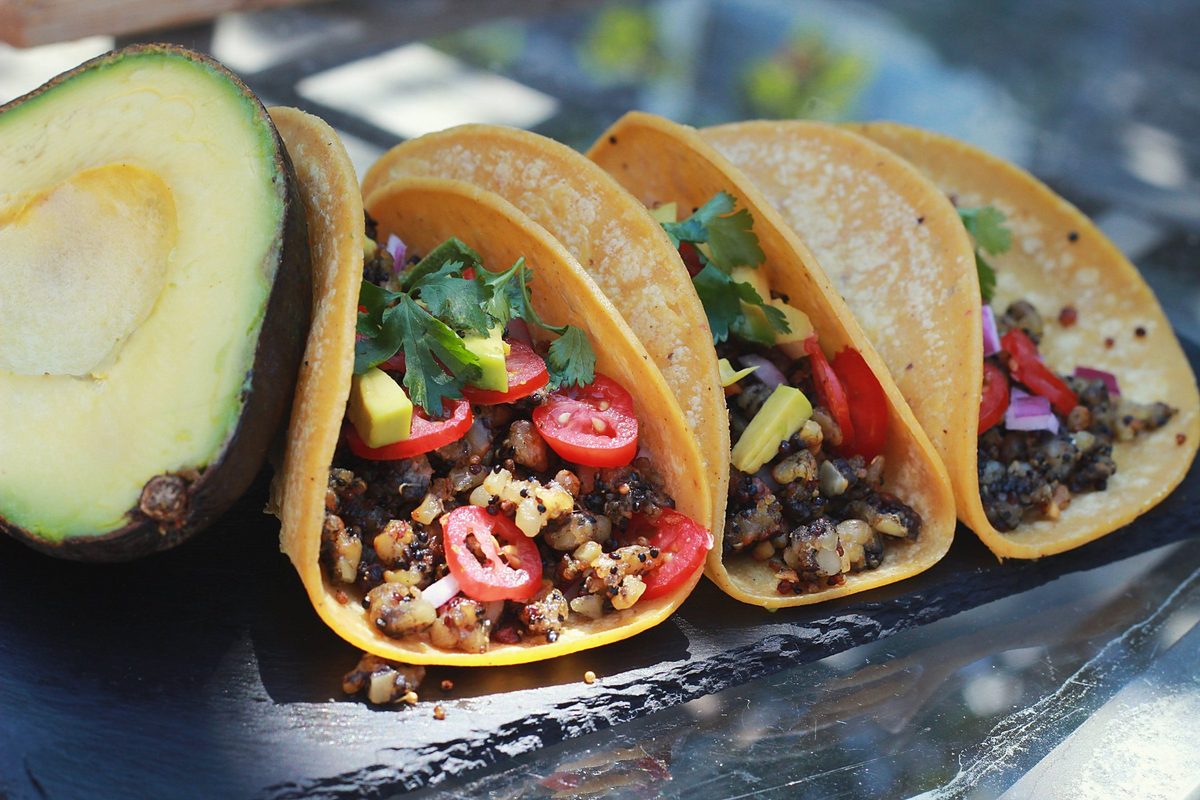
Broken up and pan-fried until browned, then folded into corn tortillas with tomato, red onion and chili.
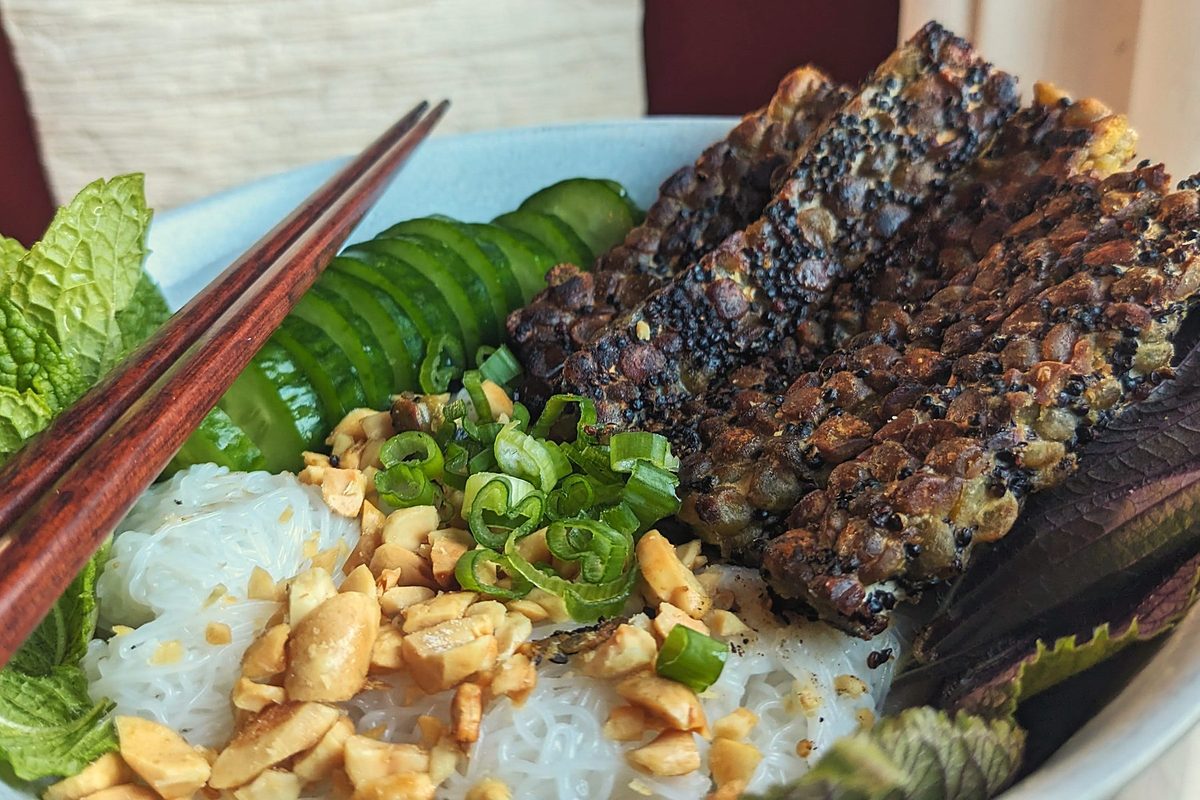
Cut into slabs and pan-fried until the edges crisp, then laid over cold rice noodles with mint, cucumber and crushed peanuts.
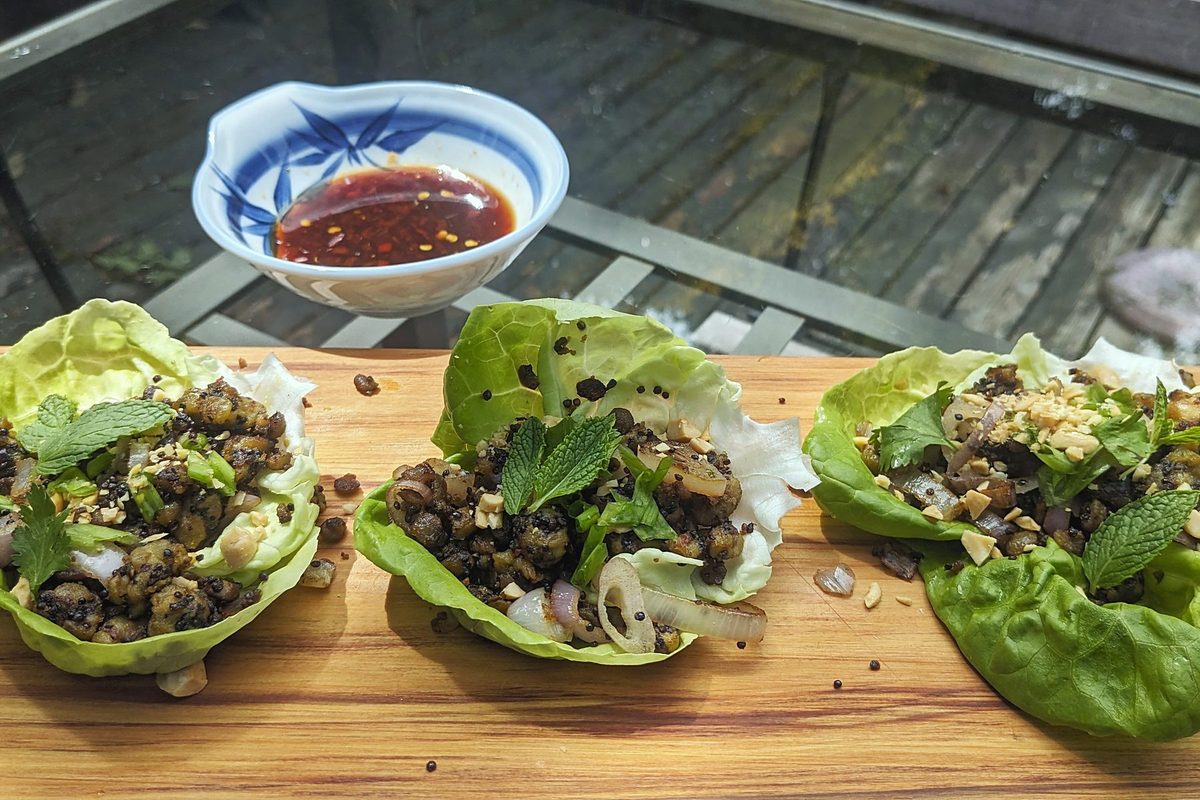
Cooked with shallot, cooled, and spooned into butter lettuce with a chili-vinegar dip on the side.
04 — How we make it
We sort and soak the legumes, simmer them al dente, then strain and cool them on perforated trays. Once they’ve cooled to near body temperature, we add a little vinegar and mix in the starter culture.
The mix is then loaded into Beanwright’s custom incubator pans, which maintain the tropical conditions in which the culture thrives: around 90 °F and nearly 100% humidity. For roughly two days, the culture grows through the legumes and binds them into one firm, white block. When the culture finally slows, we cut and pack each block, and freeze them to lock in their fresh state.
01Cook
02Culture
03Wait
Who’s making it
On the Appalachian Trail, my trail name was Lentil. I soaked lentils in my pack every day and cooked them for a big dinner every night.
I grew up vegetarian, in a house where food was fuel. If it filled us up, that was enough. In that practical spirit, I became an electrical engineer to help the switch to electric vehicles. I liked the work, but never got to build something I believed in.
Over the same years, my friends who loved food slowly taught me to love it too — not just for its use as fuel, but for the joy and community it can bring as well.
I set out to thru-hike the trail to work out what came next, after deciding I’d seek inspiration beyond my engineering world. A long walk in the woods is a great way to gain perspective. Resupplying in small towns along the way, I kept noticing how few options there were if you didn’t eat meat. Somewhere out there, I decided the next thing I built would be food.
I spent two years learning about how people around the world turn legumes and grains into hearty food: tempeh, tofu, seitan and more. I became captivated by tempeh for its almost-magical ability to transform the humble legume into a new culinary staple. With the help of my father, a retired mechanical engineer, we’ve designed and constructed Beanwright’s incubator, using modern equipment to recreate the tropical conditions found in tempeh’s birthplace.
I’d like tempeh to be everyday food, the kind anyone puts in a taco on a Tuesday. If you try it, tell me what you think.

— Brennon · Seattle, Washington
05 — Where to find us
Seattle-area farmers markets, starting early 2027.
That’s where you’ll find us, with samples ready to taste and blocks ready for your bag.
Can’t wait that long? We sell direct too. Email us at hello@beanwright.com and we’ll work out a pickup.
06 — Keep in touch
We’ll write when market dates are set, and when there are updates to our offerings. No spam, pinky promise!